|
News
Biologics promise precision; their delivery often doesn’t
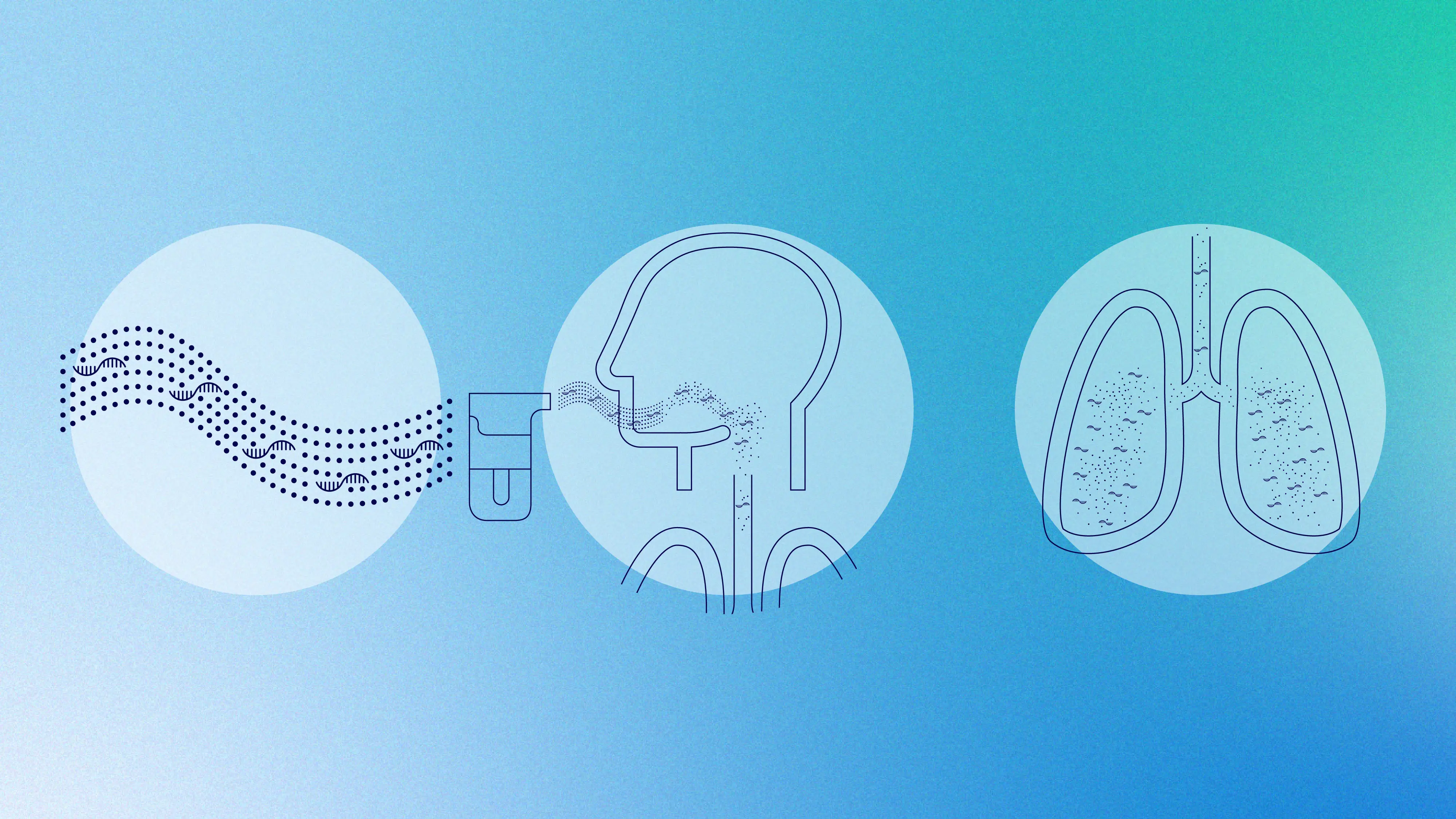
Biologic therapies represent a major advance in modern medicine, giving us the ability to target the root causes of diseases more effectively and move beyond symptom management.
The science continues to build momentum, advancing rapidly and expanding where and how biologics can be used. But as biologics become more complex, the challenge is shifting from discovery to delivery - how we administer these molecules in a way that is practical, scalable, and sustainable in the real world.
And this is where the industry is starting to fall behind.
A bottleneck we've normalised
Biologics, largely manufactured as liquids or lyophilised powders, are commonly administered by injection or infusion. However, this route through the bloodstream means therapies can be rapidly cleared by the liver or degraded in circulation. Higher doses are often needed to achieve therapeutic efficacy, potentially increasing the risk of unwanted side effects and safety issues.
Alternative routes such as pulmonary or nasal administration offer a fundamentally different pharmacological opportunity. By avoiding the liver and delivering therapies directly or closer to their targets, they may allow for lower doses while maintaining or even improving efficacy. Despite this, biologics have mostly remained tethered to injection or infusion.
The accepted explanation for this is that other delivery routes cannot reliably deliver molecules of such size, complexity, and sensitivity without compromising stability or bioavailability. And while there might be some historical basis for this, it has also become a normalised bottleneck, one that is managed rather than challenged and rarely examined for what it might be costing us.
While injectable biologics may be clinically reliable, they don’t necessarily align with the preferences or realities of patients and healthcare systems. Repeated injections and infusions increase clinical workload, cost, and infrastructure demand, and shape the patient experience around how a therapy is delivered rather than what it enables clinically.
As a result, the field has learned to work around the problem rather than solving it.
The case for inhalation
The lungs offer a compelling route for drug delivery. Their large, accessible surface area allows drugs to be absorbed quickly into the bloodstream, while also enabling direct treatment of lung tissue itself, bypassing many of the barriers associated with other routes. In practice, however, turning this potential into effective therapies has proven difficult.
Conventional inhaler technologies are highly effective for small molecules, but they were never intended for fragile biologics. The forces involved in aerosol generation, along with formulation constraints, limit what can be delivered safely and effectively.
Which leaves nebulisation.
However, nebuliser technology has changed relatively little since its invention. While devices have improved incrementally, like inhalers, they were never designed with modern biologics in mind. Shear stress, heat, and recirculation during aerosolisation can damage sensitive molecules and reduce their effectiveness.
As a result, the promise of inhaled biologics has remained largely theoretical. But new approaches are emerging to address this gap.
Moving beyond conventional approaches
In this latest article published in ONdrugDelivery, NebuFlow CSO Elijah Nazarzadeh outlines how our novel nebuliser platform enables a more controlled and gentle approach to aerosol generation.
The platform has been tested on a broad range of biologics, from antisense oligonucleotides (ASOs) and small interfering RNA (siRNA) to larger, more complex plasmid DNA and messenger RNA (mRNA) in liposomes. By reducing the stresses placed on the formulations during delivery, it becomes possible to preserve the structure and function of these complex biologics, allowing them to reach their target intact.
It’s an important shift: rather than adapting molecules to fit existing devices, we are developing a delivery technology designed around the needs of modern therapies.
Just as importantly, it reflects a move towards real-world usability. NebuFlow prioritises portability, ease of use, and sustainability. The aim is to reduce system burden and improve the patient experience, both factors that are increasingly central to how therapies create value.
Rethinking value in biologics
If administration determines how a therapy is experienced, adopted, and scaled, why is it still treated as a downstream decision?
Inhalation offers a genuine alternative approach for biologics, one that could support new indications, reduce patient burden, and strengthen the case for future therapies. For those developing or investing in biologics, delivery is no longer just a practical consideration. It is increasingly central to whether a therapy succeeds.
Platforms that can unlock new routes of administration, particularly those that align with patient needs, present a meaningful opportunity. The next phase of innovation in biologics will not be driven by discovery alone. It will depend on how well therapies can be delivered in ways that work for patients and healthcare systems in the real world.
Because a therapy that cannot be used effectively, cannot deliver on its promise.
" height="15.999999771118164px" id="xHp8vPaFa" width="89.49800189208986px"/><path d="M 12.316 6.316 C 11.788 6.317 11.261 6.249 10.751 6.112 C 9.297 5.723 8.318 4.826 7.455 4.033 C 6.455 3.115 5.665 2.389 4.261 2.389 C 3.414 2.389 2.08 3.083 1.439 3.522 L 0 1.577 C 0.235 1.415 2.506 0 4.42 0 C 6.818 0 8.05 1.276 9.17 2.302 C 9.917 2.988 10.562 3.579 11.418 3.809 C 13.14 4.269 14.78 3.21 14.796 3.2 L 16.214 5.163 C 16.129 5.219 14.471 6.316 12.316 6.316 Z" fill="rgb(255, 255, 255)" height="6.316015918178664px" id="oi5UDDihQ" transform="translate(41.5 2)" width="16.213999999999942px"/></g></svg>)